

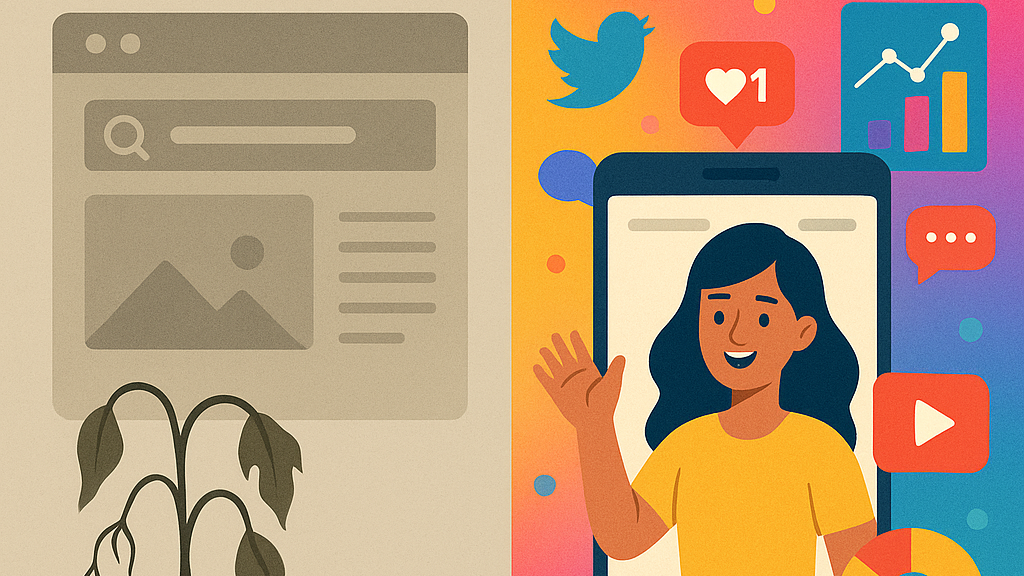
The declaration that “SEO is dead” has echoed through digital marketing circles for over a decade. From the demise of meta keywords in 2009 to the rise of mobile-first indexing, encrypted search data, and now AI-powered search engines, industry experts have repeatedly proclaimed the end of search engine optimizatiom. But what’s happening in 2025 represents something fundamentally different—not just another evolution of SEO tactics, but the complete transformation of how information is discovered, consumed, and trusted online.
SEO isn’t just evolving this time. It’s being replaced by something entirely new.
The Final Death Knell: Why This Time Is Different
Unlike previous “SEO is dead” declarations, the current transformation affects the foundational premise of search optimization itself. Traditional SEO operated on a simple principle: optimize web pages to rank higher in search engine results pages (SERPs) to drive traffic. But this model has been systematically dismantled by three converging forces:
Zero-Click Search Dominance
Nearly 60% of Google searches in 2024 ended without a single click to external websites. Users now get their answers directly from search results pages through featured snippets, AI Overviews, knowledge panels, and answer boxes. On mobile devices, this figure jumps to over 75%[54 to drive traffic—has been broken when the majority of searches never leave Google’s ecosystem.
AI-Powered Answer Engines
ChatGPT now handles approximately 3.5% of Google’s search volume, processing millions of queries daily. While this might seem small, it represents a seismic shift in search behavior. Users increasingly turn to AI platforms like ChatGPT, Perplexity, Claude, and others for direct answers rather than sifting through multiple web pages. These platforms don’t just rank content—they synthesize information from multiple sources and present unified responses, effectively bypassing traditional websites entirely.
Multi-Platform Search Ecosystem
46% of Generation Z and 35% of millennials now prefer social media over traditional search engines for information discovery. TikTok, YouTube, Instagram, and other platforms have become primary search destinations, especially for product research, reviews, and recommendations. This represents a fundamental shift from Google-centric search to a distributed, multi-platform discovery ecosystem.
What Killed Traditional SEO
The death of traditional SEO can be traced to a fundamental shift in how search engines and AI systems interpret information. SEO died when search engines stopped interpreting web pages and started interpreting brands, entities, and expertise signals across the entire digital ecosystem1.
Modern search algorithms don’t just analyze individual web pages—they evaluate:
- Brand authority signals across multiple platforms and touchpoints
- Entity relationships and knowledge graph connections
- E-E-A-T signals (Experience, Expertise, Authoritativeness, Trustworthiness) from the entire brand ecosystem
- Cross-platform content consistency and quality
- Real-world expertise validation through mentions, citations, and third-party verification
This shift means that optimizing individual web pages—the core of traditional SEO—has become largely irrelevant. Success now depends on building comprehensive brand authority that search engines and AI systems can understand and trust across all digital touchpoints.
The New Reality: Brand Signal Architecture
What has emerged to replace traditional SEO is what we might call Brand Signal Architecture—the strategic management of how brands are interpreted, understood, and represented across the entire digital ecosystem. This encompasses:
Multi-Platform Brand Consistency
Brands must now maintain consistent, high-quality signals across search engines, social platforms, AI training datasets, and knowledge graphs. This includes:
- Consistent NAP (Name, Address, Phone) information across all platforms
- Unified brand messaging and expertise positioning
- Strategic content distribution across multiple search and discovery channels
Entity-Based Optimization
Modern search success requires clear entity definition and relationship mapping. Brands must:
- Define themselves as clear, distinct entities in knowledge graphs
- Establish semantic relationships with related concepts and competitors
- Use structured data markup to communicate entity information to search engines
Trust Signal Management
Trust signals have become the primary ranking factor across all search platforms. This includes:
- Customer testimonials and reviews with verified identities
- Expert endorsements and authoritative backlinks
- Transparent business information and contact details
- SSL certificates and security indicators
The Rise of Answer Engine Optimization (AEO) and Generative Engine Optimization (GEO)
As traditional search gives way to AI-powered answer generation, two new optimization disciplines have emerged:
Answer Engine Optimization (AEO)
AEO focuses on optimizing content to appear in direct answers provided by search engines and AI platforms. This requires:
- Conversational content structure that directly answers user questions
- Structured data markup to help AI systems understand and extract information
- Clear, concise answers positioned prominently within content
- Voice search optimization for natural language queries
Generative Engine Optimization (GEO)
GEO specifically targets AI-powered generative search engines like ChatGPT, Claude, and Perplexity. Research shows that GEO strategies can boost visibility in AI-generated responses by up to 40%. Key tactics include:
- Citation-worthy content creation that AI systems prefer to reference
- Authoritative source positioning to increase likelihood of AI citation
- Structured information presentation that AI can easily parse and synthesize
The Social Search Revolution
Social media platforms have fundamentally transformed from communication tools into primary search destinations. This shift requires brands to develop platform-specific optimization strategies:
TikTok and YouTube as Search Engines
TikTok and YouTube now function as primary search engines for younger demographics. Optimization strategies include:
- Hashtag optimization for discoverability
- Platform-specific content formats optimized for each algorithm
- Real-time trend integration to capture search traffic
Multi-Platform Content Distribution
Successful brands now operate across multiple search ecosystems simultaneously. This requires:
- Platform-specific content adaptation while maintaining brand consistency
- Cross-platform SEO strategies that account for different search behaviors
- Social commerce integration for direct-purchase opportunities
What to Call This New Discipline
The practice that has replaced traditional SEO needs a new name that reflects its scope and complexity. Based on the research and current industry trends, several terms are emerging:
- Brand Signal Architecture – Emphasizing the systematic design of brand perception across platforms
- Digital Authority Engineering – Focusing on building comprehensive online expertise and trust
- Multi-Platform Visibility Optimization – Highlighting the distributed nature of modern search
- Entity-Based Brand Management – Emphasizing semantic understanding and knowledge graph positioning
- Semantic Brand Optimization – Combining semantic search principles with brand building
The Path Forward: Embracing the New Reality
For businesses and marketers, success in this new landscape requires a fundamental mindset shift:
From Page Optimization to Brand Ecosystem Management
Traditional SEO focused on optimizing individual web pages. The new discipline requires managing brand perception across the entire digital ecosystem. This includes:
- Consistent expertise positioning across all touchpoints
- Strategic content distribution across multiple platforms
- Proactive brand mention management and citation building
From Keyword Targeting to Intent Fulfillment
Modern optimization targets user intent and semantic meaning rather than specific keywords. Success requires:
- Deep understanding of user intent across different platforms
- Content that directly addresses user needs regardless of specific keywords
- Natural language optimization for conversational AI interactions
From Traffic Generation to Authority Building
The goal has shifted from driving traffic to building authentic expertise and trust that AI systems and users can recognize. This involves:
- Demonstrable expertise through content quality and depth
- Third-party validation through mentions, citations, and reviews
- Consistent value delivery across all brand touchpoints
Conclusion: Long Live the New SEO
Traditional SEO—the practice of optimizing individual web pages to rank in search engine results—is indeed dead1. The rise of zero-click searches, AI-powered answer engines, and multi-platform discovery has made the fundamental premise of traditional SEO obsolete.
But digital visibility has never been more important or more complex. What has emerged is a sophisticated discipline that combines brand management, entity optimization, multi-platform strategy, and AI-focused content creation. This new practice requires the analytical skills of an SEO professional, the strategic thinking of a brand manager, the content expertise of a publisher, and the technical knowledge of a data architect.
The question isn’t whether SEO is dead—it’s whether practitioners are ready to evolve beyond the limitations of traditional search optimization into the far more complex and rewarding world of comprehensive digital brand architecture.
For those willing to make this transition, the opportunity is unprecedented. In a world where AI systems, search engines, and social platforms all compete to surface the most authoritative and trustworthy information, brands that master this new discipline won’t just survive—they’ll dominate the conversation.
SEO is dead. Long live Brand Signal Architecture. Long live the future of digital visibility.
The transformation of search optimization represents one of the most significant shifts in digital marketing history. Success in this new landscape belongs to those who can think beyond traditional SEO tactics and embrace the complexity of modern digital brand management. The tools and strategies may have changed, but the fundamental goal remains the same: helping users find the information, products, and services they need when they need them.