
In the past 15 years, Bangladesh has faced significant challenges in its relationship with global politics, particularly due to the authoritarian regime led by Prime Minister Sheikh Hasina.
This period has seen a marked decline in foreign aid and donations to the NGO sector, crucial for addressing various social issues in the country. The Hasina government’s failure to maintain positive relations with key global leaders has exacerbated this situation, leading to a substantial donation gap that NGOs have struggled to fill.
The Shift in Bangladesh’s Foreign Relations
With the conclusion of Hasina’s regime, Bangladesh’s international standing has seen a noticeable shift. Experts suggest that the new leadership under Dr. Mohammad Yunus could pave the way for improved relations with the United States and other Western nations. The Biden administration quickly embraced Yunus’s government, offering various forms of support that were previously absent. This change has led to an upward trend in foreign aid and donations, particularly from the U.S., which has historically been a significant donor for humanitarian efforts in Bangladesh, including the Rohingya crisis.
Concerns Over Donald Trump’s Policies
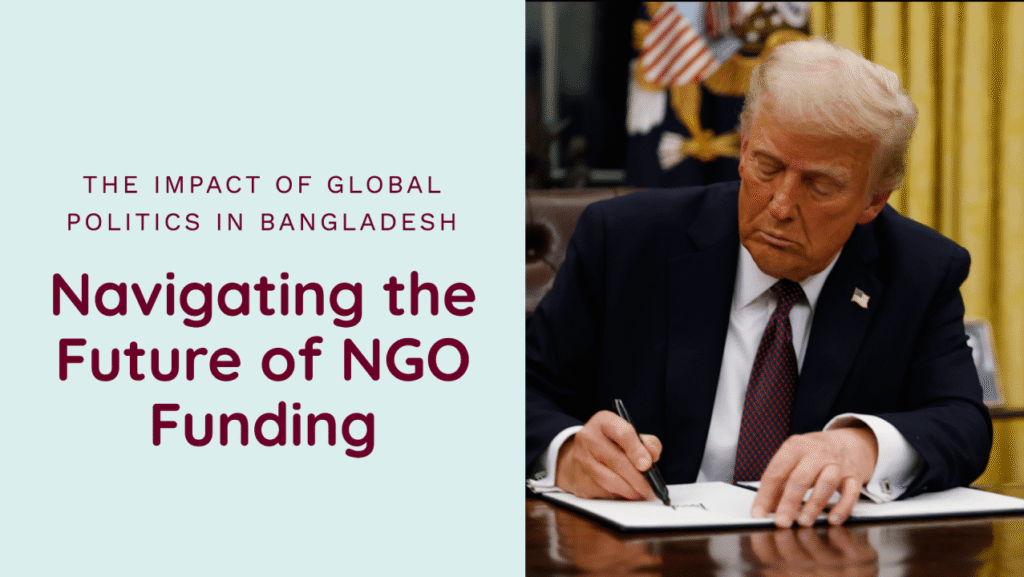
However, the recent U.S. elections have raised concerns about the potential implications of Donald Trump’s return to power. His administration’s “America First” policy previously resulted in significant cuts to foreign aid, including proposals to slash funding for programs that directly benefit low- and middle-income countries like Bangladesh. Trump’s approach often viewed foreign aid as a transactional tool rather than an essential component of international relations, which could lead to further reductions in support for crucial initiatives.
Key Areas of Concern:
- Foreign Aid Reductions: Trump’s administration had proposed budget cuts of around 30% to foreign assistance programs, which could severely impact funding for NGOs operating in Bangladesh.
- Climate Change Funding: Given Bangladesh’s vulnerability to climate change, Trump’s previous withdrawal from the Paris Agreement and scepticism towards climate initiatives raise alarms about future funding for climate adaptation efforts.
- Humanitarian Assistance: The U.S. has been a leading donor to humanitarian crises, including support for Rohingya refugees. However, a Trump presidency may decrease commitments in this area as he prioritizes domestic over international concerns.
The Future of Donations in Bangladesh
The potential return of Trump poses a dual challenge. While there may be opportunities for increased funding under a more favourable political climate post-Hasina, there is also the looming threat of reduced U.S. contributions due to Trump’s historical stance on foreign aid and global issues.
As we navigate this uncertain landscape, it is crucial for NGOs and stakeholders in Bangladesh to proactively seek partnerships with other nations and organizations that prioritize humanitarian assistance and climate resilience. Strengthening domestic policies related to climate adaptation and social welfare will also be essential to mitigate the impacts of any potential reductions in international support.
In conclusion, while there is hope on the horizon with new leadership in Bangladesh potentially revitalizing international relations, the implications of Donald Trump’s policies could significantly affect the flow of donations and aid necessary for sustaining vital NGO operations within the country. We must remain vigilant and adaptable to these changing dynamics as we work towards a more stable future for Bangladesh.